COMPACT AUTOMATION RG112-2 Pneumatic Rotary Gripper
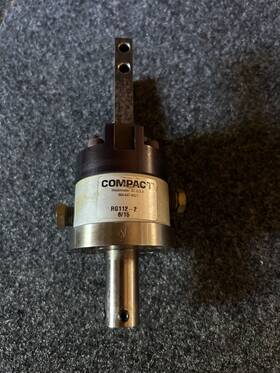
( Brand: Compact Automation ), ( Manufacturer Part Number: RG112-2 ), ( Model: COMPACT AUTOMATION RG112-2 ), ( Robotics Controls Type: Gripper ), ( Type: Rotary Gripper )
Review COMPACT AUTOMATION Pneumatic Rotary Gripper Tested Working
The **RG112-2 Pneumatic Rotary Gripper** from Automation is a high-performance, precision-engineered tool designed to deliver exceptional reliability and versatility in automated assembly, material handling, and robotic applications. This compact yet robust gripper combines advanced pneumatic actuation with a 360-degree rotational mechanism, enabling seamless integration into pick-and-place systems, conveyor lines, and collaborative robotics setups. Built with a durable aluminum housing and precision-machined components, the RG112-2 ensures long-lasting performance even in demanding industrial environments, where exposure to dust, moisture, and temperature fluctuations is common. Its modular design allows for easy customization, accommodating a wide range of part sizes and shapes, from lightweight components to heavier payloads, thanks to its adjustable finger spacing and interchangeable jaw profiles. The integrated pneumatic system operates with minimal noise and vibration, powered by standard compressed air (typically 6 8 bar), making it energy-efficient while maintaining consistent gripping force for repeatable and precise operations.
One of the standout features of the RG112-2 is its **rotary function**, which enables parts to be oriented or positioned with ease during transfer, eliminating the need for additional indexing mechanisms. This rotation capability is achieved through a smooth, low-friction bearing system, ensuring smooth and repeatable movement without backlash, which is critical for applications requiring high-speed cycles or delicate handling. The gripper s fingers are constructed from high-grade, wear-resistant materials, such as hardened steel or polyurethane-coated surfaces, depending on the application, providing both durability and adaptability for gripping smooth, rough, or irregularly shaped objects. Additionally, the RG112-2 is equipped with **position feedback options**, including limit switches or proximity sensors, allowing for precise control and integration with PLCs or robotic controllers for enhanced automation.
Safety and ease of maintenance are also prioritized in the design of the RG112-2. The gripper features a **quick-release mechanism** for easy finger replacement or adjustment, reducing downtime during maintenance. Its compact footprint and lightweight construction make it ideal for integration into tight spaces or on articulated robotic arms without compromising stability. The unit is also designed with **IP-rated protection** (typically IP65 or higher), ensuring resistance to dust, water splashes, and contaminants, which is essential for cleanroom environments or outdoor applications. Whether deployed in automotive assembly, electronics manufacturing, packaging, or logistics, the RG112-2 delivers a perfect balance of precision, flexibility, and reliability, making it a cornerstone for modern automated systems seeking efficiency and scalability.
The **Automation RG112-2 Pneumatic Rotary Gripper** is a versatile tool designed for automated handling applications, particularly in industrial settings where precision and repeatability are critical. Below is a detailed breakdown of its pros and cons, followed by a conclusion and recommendation.
---
### **Pros of the Automation RG112-2 Pneumatic Rotary Gripper**
1. **High Precision and Repeatability**
The RG112-2 is engineered for consistent performance, making it ideal for applications requiring exact positioning and repeatable cycles. Its rotary mechanism ensures reliable angular adjustments, reducing variability in part placement or orientation.
2. **Versatile Mounting Options**
The gripper is designed with modularity in mind, allowing it to be integrated into various robotic arms, conveyors, or automated systems. It can be mounted on standard robot flanges (e.g., SCARA, articulated, or Cartesian robots) and supports multiple orientations, enhancing its adaptability.
3. **Pneumatic Operation**
Pneumatic systems offer several advantages:- **Quick Response Time**: Air actuators respond rapidly, enabling high-speed operations in automated lines.
- **No Electrical Hazards**: Suitable for environments where electrical components may pose risks (e.g., flammable or explosive atmospheres).
- **Low Maintenance**: Pneumatic systems generally require less maintenance compared to hydraulic or electric alternatives, especially in clean or controlled environments.
4. **Adjustable Grip Force**
The RG112-2 allows for fine-tuning of grip force, accommodating parts of varying sizes, weights, and materials. This adjustability reduces the risk of damaging delicate components while ensuring secure handling of heavier items.
5. **Durability and Longevity**
Constructed from robust materials (e.g., hardened steel, aluminum, or stainless steel components), the gripper is built to withstand heavy-duty use in industrial settings. Its design minimizes wear and tear, extending its operational lifespan.
6. **Compatibility with Existing Systems**
The gripper is designed to work seamlessly with standard pneumatic controls (e.g., solenoid valves, pressure regulators) and can be integrated into existing automation setups with minimal modifications. This reduces retrofitting costs and downtime.
7. **Safety Features**
Many pneumatic grippers, including this model, include safety mechanisms such as:- **Pressure Monitoring**: Ensures consistent grip force.
- **Limit Switches**: Prevent over-rotation or excessive force application.
- **Quick-Release Mechanisms**: Allow for easy part ejection in case of jams or malfunctions.
8. **Cost-Effective for High-Volume Applications**
While the initial investment may be moderate, the gripper s efficiency and durability make it cost-effective for high-volume production lines. Reduced manual labor and increased throughput justify the expense over time.
9. **Easy Maintenance and Cleanliness**
Pneumatic systems are generally easier to clean and maintain than hydraulic or electric systems. The absence of fluids (e.g., oil) reduces contamination risks in industries like food processing or pharmaceuticals.
10. **Customization Potential**
The RG112-2 can be customized with different jaw profiles (e.g., vacuum cups, magnetic grippers, or specialized fingers) to handle specific part shapes or materials. This flexibility makes it suitable for a wide range of applications.
---
### **Cons of the Automation RG112-2 Pneumatic Rotary Gripper**
1. **Dependence on Compressed Air Supply**
Pneumatic systems require a reliable source of compressed air, which may not always be available or may introduce additional costs (e.g., air compressors, filters, and dryers). In remote or off-grid locations, this can be a significant drawback.
2. **Limited Force Output Compared to Hydraulics**
While pneumatic systems are powerful, they generally cannot match the force output of hydraulic systems. For extremely heavy or high-force applications (e.g., lifting large metal parts), a pneumatic gripper may require additional assistance or may not be suitable.
3. **Noise and Vibration**
Pneumatic actuators can generate noise and vibration, which may be problematic in environments requiring a quiet operation (e.g., cleanrooms, laboratories, or customer-facing areas). Soundproofing or vibration dampening may be necessary.
4. **Temperature Sensitivity**
Extreme temperatures can affect the performance of pneumatic components, such as seals and valves. In environments with high heat or cold, additional insulation or heating/cooling systems may be required.
5. **Lower Precision in Fine Applications**
While the RG112-2 offers good precision, it may not be as accurate as electric servo grippers for ultra-fine or delicate tasks (e.g., handling small electronic components or medical devices). Electric grippers often provide smoother, more controlled movements.
6. **Potential for Air Leaks**
Pneumatic systems are susceptible to air leaks, which can lead to inefficiencies (e.g., wasted energy, reduced grip force) and increased maintenance requirements. Regular inspections and maintenance are necessary to prevent leaks.
7. **Limited Integration with Non-Pneumatic Systems**
If the automation system includes a mix of pneumatic, hydraulic, and electric components, integrating the RG112-2 may require additional controllers or interfaces, adding complexity to the setup.
8. **Initial Setup Complexity**
Proper calibration and programming of the gripper s rotation, force, and timing may require technical expertise, especially when integrating it into a new robotic system. This can lead to initial setup delays and potential errors.
9. **Environmental Limitations**
The gripper may not be suitable for environments with high levels of dust, moisture, or corrosive substances, as these can damage pneumatic components over time. Special coatings or seals may be needed for harsh conditions.
10. **Higher Operating Costs in Some Cases**
While maintenance is generally low, the ongoing cost of compressed air (energy consumption) and potential repairs can add up, especially in large-scale operations. Energy-efficient compressors and proper system design can mitigate this, but it remains a consideration.
---
### **Conclusion**
The **Automation RG112-2 Pneumatic Rotary Gripper** is a highly capable tool for industrial automation, particularly in applications requiring reliable, repeatable, and high-speed handling. Its pneumatic operation offers advantages in terms of speed, safety, and ease of maintenance, while its modular design and adjustability make it adaptable to a wide range of tasks. The gripper excels in environments where precision, durability, and compatibility with existing systems are prioritized, such as manufacturing, packaging, or material handling.
However, its reliance on compressed air, sensitivity to environmental conditions, and potential limitations in ultra-fine or high-force applications may pose challenges in certain scenarios. For applications where electric or hydraulic systems are more suitable (e.g., fine electronics assembly or heavy-duty lifting), alternative grippers may be more appropriate.
---
### **Recommendation**
**Buy the Automation RG112-2 Pneumatic Rotary Gripper if:**- You are working in an **industrial automation setting** where speed, repeatability, and durability are critical (e.g., assembly lines, packaging, or material sorting).
- Your system **already uses pneumatic controls**, and you want to maintain consistency in your automation setup.
- You need a **versatile gripper** that can handle a variety of part sizes and shapes with adjustable force.
- Your environment is **clean or controlled**, minimizing the risk of damage to pneumatic components.
- You prioritize **low maintenance** and **quick response times** over ultra-high precision or fine control.
**Consider Alternatives if:**- Your application requires **ultra-high precision or fine movements** (e.g., handling small electronic components), in which case an **electric servo gripper** may be better.
- You are working in a **highly corrosive or extreme-temperature environment**, where a **hydraulic or specialized pneumatic gripper** with protective coatings may be necessary.
- Your system lacks a **reliable compressed air supply**, making an **electric or hydraulic gripper** more practical.
- You are handling **extremely heavy or large parts**, where the force output of a pneumatic gripper may be insufficient.
**Final Verdict:**For most **general-purpose industrial automation applications**, the **Automation RG112-2 Pneumatic Rotary Gripper** is a strong and cost-effective choice. Its balance of performance, adaptability, and ease of use makes it a reliable addition to automated systems where pneumatic operation is feasible. However, always conduct a thorough assessment of your specific requirements and environmental conditions before making a purchase.
Details:
Manufacturer: Compact Automation Westminster, SC. Ideal for: Industrial Automation. Compact Automation RG112-2 Pneumatic Rotary Gripper. Features: model: RG112-2.
Used, tested, and working properly. Machine builders and integrator. Manufacturing equipment repair. Robotics projects.
Industrial robotic end-of-arm tooling. Removed from a functioning industrial Automation system. Tested and verified working. Smooth operation.
part #: rg1122 price
- $95.00
specifications robotiindustri:
- brand: Compact Automation
- mpn: Rg112-2
- model: Compact Automation Rg112-2
- robotics controls type: Gripper
- type: Rotary Gripper
shipping robotiindustri:
- carrier: USPS
- service: USPS Priority Mail
- transit: 4-8 Days
- cost: $15.00
- type: Calculated
- class: Expedited
general robotiindustri:
- Business Industrial > Industrial Automation Motion Controls > Industrial Robotic Arms
- condition: Used
payments robotiindustri:
- wallet: Paypal
- credit card: Mastercard
- other
returns robotiindustri:
- policy: No Returns
seller robotiindustri:
- # reviews: 1322
- rating: 98.9%
- city: Mayville, Michigan
offer robotiindustri:
- quantity: 1
- availability: In Stock
- options: Ship-to-home
- sold: 0
- started: May 31, 2026
- best offers: True
Compact Automation RG112-2 Is Similar To:
- Asg202-3 Compact Automation New Nos (45.5% similar) Inventory LOCATION:UT14. New in the package - never used the part number is ASG202-3. Brand new old stock Compact Automation gripper. Make sure this is correct for you before buying...(September 8th, 2017)
- Rg112-3 Compact Automation Producst Products (45.5% similar) Compact Automation products - RG112-3 gripper pneumatic 2 jaw gripper new still in sealed package finger easily removed to allow machining photo shows actual gripper red banding, bag...(April 15th, 2017)
- S212x478 Compact Pneumatic Cylinder New (45.7% similar) ...(May 28th, 2017)
- Compact Air Sg072-1 Pneumatic Gripper (62.1% similar) Pneumatic gripper...(August 1st, 2024)