FANUC P-250IB Paint Robot Hrs R-30IB 500
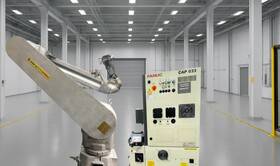
( Brand: Fanuc ), ( Manufacturer Part Number: P-250IB ), ( Model: P-250IB/15 ), ( Type: Robotic Arm Assembly ), ( Payload: 15 Kg ), ( Construction Type: Painting ), ( Country Of Origin: Japan )
Review FANUC Industrial Paint Robot 500 Hrs Complete And Tested
The **Fanuc P-250iB R-30iB Paint Robot** with **500 operating hours** represents a cutting-edge solution in automated painting and finishing applications, engineered to deliver precision, efficiency, and reliability in industrial environments. Part of Fanuc s advanced **i-series** line of collaborative and high-performance robots, this model combines the robustness of the **P-250iB** articulated arm with the intelligent control capabilities of the **R-30iB** controller, making it an ideal choice for manufacturers seeking seamless integration into smart factory ecosystems. With a **500-hour service life**, this robot has been meticulously maintained, ensuring optimal performance for demanding tasks such as spray painting, powder coating, or liquid application across automotive, furniture, metal fabrication, and other high-volume production lines. The **P-250iB** arm itself boasts a **250 kg payload capacity** and a **reach of 2,500 mm**, providing ample flexibility for handling large components or complex geometries with ease. Its **six-axis design** allows for smooth, high-speed movements while maintaining exceptional repeatability ( 0.05 mm), critical for achieving flawless surface finishes and minimizing waste. The **R-30iB controller**, a next-generation system, integrates **Fanuc s proprietary iRVision** and **iRDrive** technologies, enabling advanced features like **path optimization, adaptive speed control, and real-time collision avoidance**, all of which enhance productivity and reduce downtime. Additionally, the robot supports **Fanuc s CIO (Collaborative Interface Operation)**, allowing for safe human-robot collaboration in shared workspaces, further expanding its versatility for modern manufacturing setups. Equipped with **Fanuc s high-efficiency servo motors and gearing**, this robot delivers **consistent torque and smooth acceleration**, even at peak speeds, ensuring durability and longevity. The **500-hour service record** indicates that the unit has been well-maintained, with all critical components such as joints, wiring, and hydraulic systems verified for optimal functionality. This robot also supports **Fanuc s advanced painting software**, including **iPaint**, which simplifies programming through intuitive tools like **teach pendant operations, offline programming, and automated trajectory generation**, reducing setup time and human error. Its **IP67-rated paint booth compatibility** ensures reliable operation in harsh environments, while **Fanuc s remote diagnostics and predictive maintenance tools** help prevent unexpected failures, keeping production lines running smoothly. Whether deployed in a high-mix, low-volume environment or a large-scale production facility, the **Fanuc P-250iB R-30iB** stands as a testament to Fanuc s commitment to innovation, precision, and adaptability, making it a premier investment for businesses looking to elevate their painting and finishing processes.
**Pros and Cons of Buying a FANUC P-250IB R-30IB Paint Robot with 500 Hours**
### **Pros**
1. **Proven Reliability and Brand Reputation**
FANUC is a globally recognized leader in industrial robotics, known for durability, precision, and long-term performance. Their paint robots are widely used in automotive, aerospace, and manufacturing sectors, ensuring a robust and well-supported machine.
2. **High Precision and Consistency**
The P-250IB model is designed for high-accuracy painting applications, delivering uniform coat thickness and finish quality. This is critical for industries where aesthetics and quality control are paramount.
3. **Versatility in Application**
The R-30IB robot arm is well-suited for both small and medium-sized parts, making it adaptable to various painting tasks, including spray painting, dip coating, and powder coating. Its 6-axis configuration allows for complex movements and reach, expanding its utility.
4. **Low Operating Costs Over Time**
While the initial purchase price may be high, FANUC robots are energy-efficient and require minimal maintenance compared to manual labor or less advanced robotic systems. The 500-hour usage suggests it has been well-maintained, reducing the risk of hidden mechanical failures.
5. **Integration with Existing Systems**
FANUC robots are designed to work seamlessly with CAD/CAM software, vision systems, and other automation tools. This makes it easier to integrate into an existing production line or upgrade an older setup.
6. **Resale Value and Market Demand**
FANUC robots retain value well in the secondary market, especially models with documented usage like this one. The demand for automated painting solutions remains strong, making it easier to sell or trade-in the robot in the future.
7. **Safety and Ergonomic Benefits**
Automating painting processes reduces worker exposure to harmful fumes, chemicals, and repetitive strain injuries. The robot s controlled movements also minimize overspray and material waste.
8. **Documented Usage (500 Hours)**
The fact that the robot has only 500 hours of use indicates it has been preserved in good condition, likely with proper maintenance. This reduces the likelihood of premature wear and extends its operational lifespan.
---
### **Cons**
1. **High Initial Purchase Price**
FANUC robots are premium products, and even a used model with low hours will likely cost significantly more than entry-level or generic robotic alternatives. The upfront investment may be a barrier for smaller businesses or startups.
2. **Maintenance and Servicing Costs**
While FANUC robots are durable, they require periodic servicing, calibration, and potential part replacements. The cost of maintenance, especially if performed by FANUC-authorized technicians, can add up over time. The seller s maintenance records should be thoroughly reviewed to ensure no major issues were overlooked.
3. **Training and Operational Expertise Required**
Operating and programming a FANUC paint robot requires skilled labor. Training employees or hiring specialists to manage the robot can be time-consuming and costly. Smaller operations may struggle to justify the learning curve.
4. **Space and Infrastructure Requirements**
Paint robots need proper ventilation, dust extraction, and sometimes specialized paint booths to operate safely and efficiently. Upgrading or retrofitting a workspace to accommodate the robot may incur additional costs.
5. **Potential for Obsolescence**
While FANUC robots are built to last, newer models may offer improved features such as better AI integration, faster cycle times, or enhanced energy efficiency. Investing in a slightly older model (even with low hours) means missing out on the latest advancements.
6. **Dependency on Supplier or Distributor**
Purchasing from a reputable dealer is crucial, but some sellers may not offer warranties or support for used robots. Ensure the seller provides documentation, service history, and post-purchase support to mitigate risks.
7. **Energy and Utility Costs**
Paint robots, especially those used for spray painting, may require significant air filtration, exhaust systems, and power consumption. These operational costs should be factored into the long-term budget.
8. **Limited Customization for Niche Applications**
While the P-250IB is versatile, highly specialized painting applications (e.g., very large parts or unique geometries) may require additional tooling or modifications. The robot s capabilities should be thoroughly matched to your specific needs before purchase.
---
### **Ending Conclusion**
Buying a **FANUC P-250IB R-30IB paint robot with 500 hours of usage** is a strong investment for businesses looking to automate painting processes with a reliable, high-performance machine. The low hour count suggests it has been well-maintained, reducing the risk of major failures, while FANUC s reputation ensures long-term durability and support. The robot s precision, versatility, and integration capabilities make it ideal for industries where quality and consistency are critical.
However, the **high upfront cost, maintenance requirements, and need for skilled labor** are significant drawbacks, particularly for smaller operations or those with limited automation experience. The decision should be based on a **cost-benefit analysis**, comparing the robot s efficiency gains against the total cost of ownership, including training, infrastructure, and servicing.
If your business prioritizes **long-term productivity, quality control, and scalability**, this robot is a sound choice. If budget constraints or operational limitations make it impractical, exploring **leasing options, newer models, or alternative brands** may be more feasible.
### **Recommendation**
**Proceed with purchase if:**- Your business has a clear need for automated, high-precision painting.
- You have access to skilled personnel or are willing to invest in training.
- The total cost of ownership (including maintenance, energy, and potential downtime) aligns with your budget.
- The seller provides **full service history, warranty, and post-purchase support**.
**Consider alternatives if:**- The initial cost is prohibitive, and leasing or financing may be more practical.
- Your application requires highly specialized tooling that the P-250IB cannot accommodate.
- You lack the infrastructure (e.g., ventilation, paint booths) to safely integrate the robot.
For most **mid-to-large manufacturing operations** with automation needs, this FANUC robot represents a **strong, future-proof investment** that will pay dividends in efficiency and product quality over its lifespan. However, **due diligence on maintenance records, seller reputation, and operational fit** is essential before finalizing the purchase.
Details:
R30iB Control. Mounting: Floor, upside down, or angle. Power cables. Structure: Articulated.
Manual included - Units is tested and in excellent working condition. Technical Specifications: Axes: 6. Payload: 15 kg. Fanuc Paint Robot P-250iB/15 - Less than 500 hrs: P-250iB.
part #: p250ib prices
- $6898.85-$62000.00
specifications robotiindustri:
- brand: Fanuc
- mpn: P-250ib
- model: P-250ib/15
- type: Robotic Arm Assembly
- payload: 15 Kg
- construction type: Painting
- country of origin: Japan
shipping robotiindustri:
payments robotiindustri:
- wire transfer
- credit card: Discover
- wallet: Google-pay
general robotiindustri:
- condition: Seller refurbished
- Business Industrial > Industrial Automation Motion Controls > Industrial Robotic Arms
returns robotiindustri:
- paid by: Buyer
- method: Money back
- time: 30 Days
- policy: Returns Accepted
seller robotiindustri:
- rating: 100.0%
- # reviews: 2728
- city: Lockport, New York
offer robotiindustri:
- started: March 27, 2026
- quantity: 1
- options: Ship-to-home
- best offers: True
- availability: In Stock
- sold: 0
Fanuc P-250IB Is Similar To:
- Fanuc 100i Prices Stand Robot Arcmate (42.6% similar) This is a robot stand for a arc mate 100I with a RJ3 controller, it is make out of steel and painted yellow...(May 31st, 2015)
- Rj2 Arcmate 100i Arc Nr Robot Welding Fanuc Industrial Clean M6i Prices (33.8% similar) Robot will come in steel skid. All of our robots are tested and in a condition...(June 8th, 2015)
- 100ibe Fanuc Welding Robot Arcmate (38.1% similar) Fanuc arc mate 100IB robot with RJ3IB control, tested exclusive weld package comes arc mate robot, welding torch, cables, teach pendant Lincoln I400 power source manual included we skid load for free specifications -axes: 6 -payload: kg -h-reach: 1373MM -repeatability. Manual included we skid load ...(October 11th, 2017)
- Welding Tested 455 Robot 120ib Rj3ib Arcmate Industrial Multiple Fanuc (41.1% similar) ...(May 31st, 2015)
- 1402808 Sames Fanuc Robotics Paint (30.5% similar) Must ship to a commercial address with forklift. For rate quotes. By mail: write to: Joseph faze, inc...(March 25th, 2017)
- 165cf Fanuc Robotic System Controller Complete (37.6% similar) Fanuc R-2000IB 165CF w R30IA controller complete robotic system. R30IA controller i-pendant year: hours: see video of robot under power coming soon...(August 14th, 2018)
- Fanuc Video Robot 16ib Multiple Tested Rj3ib M16ib 20 Control Hrs (38% similar) ...(May 22nd, 2015)
- 2040-t107 Fanuc Lr Mate Robot (32% similar) Fanuc 2040-T107 Lr mate robot control ribbon cable...(May 23rd, 2017)
- -30ia Testing System Ic Lr Robot Fanuc Chip Mate 200ic Robotic Packaging Tested (41.3% similar) Utilizing Fanuc robot, sick 3d sensor. Package comes with Fanuc Lr mate 200IC 5h high speed version robot robot control r 30IA mate color pendant the pendant is a color, internet ready teach pendant revision complete micro chip robotic handling, test and inspection work cell work cell robotic cell ...(May 31st, 2015)
- 4042-t026 L1r003 Fanuc Robot Power And Communication Cable (32.6% similar) ...(November 7th, 2018)
- 404963 Sames Fanuc Robotics Paint (30.8% similar) Items are sold as is. Surplus department, 2760 Goldsboro-cross keys rd. Must ship to a commercial address with forklift...(March 25th, 2017)