ABB 6-4-50 Irb Robotic Arm Controller Cables 6/4-50
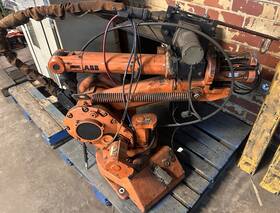
( Brand: Abb ), ( Manufacturer Part Number: 6/4-50 ), ( Model: IRB 6/4-50 ), ( Type: Robotic Arm Assembly ), ( Arm Reach: 850 Mm ), ( Payload: 5 Kg ), ( Robotics Controls Type: Arm ), ( Construction Type: Handling )
Review ABB 6/4-50 Irb Robotic Arm Assembly Controller Cables
The **ABB 6/4-50 IRB Robotic Arm Controller Cables** are a critical component for maintaining seamless communication and operational integrity between an ABB IRB industrial robot and its control system. Designed specifically for the **IRB 6/4-50 series**, these high-performance cables are engineered to deliver reliable data transmission, power distribution, and signal integrity in demanding industrial environments. Constructed with robust, abrasion-resistant materials, these cables are built to withstand the harsh conditions of manufacturing plants, including exposure to dust, moisture, and temperature fluctuations, ensuring long-term durability and consistent performance. The cables feature a **shielded design** to minimize electromagnetic interference (EMI), which is essential for maintaining precise control signals and reducing the risk of operational errors in high-speed robotic applications. Whether used in assembly lines, material handling, welding, or packaging systems, these cables provide the necessary bandwidth and signal stability to support the advanced motion control and automation capabilities of the IRB 6/4-50 robot. Their modular and flexible construction allows for easy installation and reconfiguration, accommodating the dynamic needs of modern robotic workflows while adhering to strict industrial safety and compliance standards. By ensuring uninterrupted connectivity between the robot s controller and its actuators, these cables play a pivotal role in enhancing productivity, reducing downtime, and maintaining the precision required for high-precision robotic tasks.
**Pros and Cons of Buying ABB 6/4-50 IRB Robotic Arm Controller Cables**
### **Pros**
1. **Compatibility and Reliability** ABB s proprietary cables are specifically designed for their industrial robotic controllers, ensuring seamless integration with IRB models like the 6/4-50. This reduces the risk of connectivity issues, signal degradation, or hardware damage that could arise from third-party or generic alternatives.
2. **Performance Optimization** These cables are engineered to handle high-speed data transmission, robust electrical signals, and environmental stresses common in industrial settings (e.g., temperature fluctuations, vibration, and exposure to dust or moisture). This minimizes latency and ensures stable operation of the robotic arm s control system.
3. **Warranty and Support** Purchasing genuine ABB cables often comes with the manufacturer s warranty, which may cover defects or failures. ABB s technical support can also provide guidance on installation, troubleshooting, and compatibility, reducing downtime and maintenance headaches.
4. **Long-Term Durability** Industrial robotic systems operate in demanding environments, and ABB cables are built to withstand prolonged use without frequent replacements. This lowers maintenance costs and extends the lifespan of the robotic controller and arm.
5. **Safety and Compliance** ABB cables adhere to strict industrial safety standards (e.g., UL, CE, or ISO certifications) and are tested for electromagnetic interference (EMI) resistance. Using genuine cables helps avoid compliance risks or safety hazards that could arise from inferior or uncertified alternatives.
6. **Ease of Installation and Replacement** ABB cables are designed with standardized connectors and routing paths, simplifying installation and replacement processes. This reduces training time for technicians and minimizes errors during setup.
7. **Future-Proofing** ABB frequently updates its robotic controllers with new firmware or features. Genuine cables are more likely to remain compatible with future software updates, whereas generic cables might become obsolete or cause compatibility issues over time.
---
### **Cons**
1. **Higher Cost** ABB cables are significantly more expensive than generic or aftermarket alternatives. For businesses operating on tight budgets, this can be a substantial upfront investment, especially if multiple cables are required for a robotic system.
2. **Limited Availability** Genuine ABB cables may not be readily available from all suppliers, particularly for older or discontinued models. This can lead to longer lead times or reliance on ABB s official distributors, which may have higher prices or limited stock.
3. **Overkill for Non-Industrial Use** If the robotic arm is used in a low-stress environment (e.g., a small workshop or educational setting), the robust build of ABB cables might be unnecessary. In such cases, more affordable cables could suffice without compromising performance.
4. **Potential for Overordering** Some users may purchase extra cables as a precaution, leading to inventory bloat. Since ABB cables are not typically cheap, this can tie up capital unnecessarily.
5. **Dependence on ABB s Supply Chain** If ABB experiences supply chain disruptions (e.g., due to global shortages or manufacturing issues), obtaining replacement cables could become difficult, causing delays in maintenance or repairs.
6. **Mixed Perceptions on Longevity** While ABB cables are durable, some users report that their performance degrades over time due to wear and tear, particularly in harsh environments. This may require periodic inspections or replacements, adding to long-term costs.
7. **Training and Expertise Required** Installing or troubleshooting ABB-specific cables may require specialized knowledge, especially if the connectors or wiring schemes are complex. This could necessitate hiring trained technicians or consulting ABB s support, adding to operational costs.
---
### **Conclusion**
Buying genuine ABB 6/4-50 IRB robotic arm controller cables is generally the best choice for industrial applications where reliability, performance, and long-term compatibility are critical. The investment in quality cables pays off through reduced downtime, fewer connectivity issues, and adherence to safety standards. However, the higher cost and potential availability challenges make them less ideal for non-industrial or budget-constrained settings.
For most industrial users, the benefits of using ABB s proprietary cables such as optimized performance, warranty coverage, and future-proofing outweigh the drawbacks. If cost is a major concern, it may be worth exploring ABB s authorized distributors for bulk discounts or checking for refurbished or surplus cables, though caution should be exercised to ensure authenticity and condition.
### **Recommendation**
**Purchase genuine ABB cables for industrial applications.** If budget constraints are a concern, verify the cables authenticity through ABB s official channels or reputable distributors to avoid counterfeit products. For non-critical or low-stress environments, consider consulting ABB s technical team to determine if a lower-cost alternative (e.g., a certified generic cable) could meet requirements without compromising safety or performance. Always prioritize cables that meet or exceed the robotic system s specifications to ensure seamless operation.
Details:
part #: 6450 prices
- $733.77-$3500.00
specifications robotiindustri:
- brand: Abb
- mpn: 6/4-50
- model: Irb 6/4-50
- type: Robotic Arm Assembly
- arm reach: 850 Mm
- payload: 5 Kg
- robotics controls type: Arm
- construction type: Handling
general robotiindustri:
- Business Industrial > Industrial Automation Motion Controls > Industrial Robotic Arms
- condition: Used
payments robotiindustri:
- other
- credit card: Discover
- wallet: Paypal
shipping robotiindustri:
- carrier: FedEx
- class: Standard
- transit: 4-10 Days
- cost: $453.35
- type: Calculated
- service: FedEx Ground / FedEx Home Delivery
offer robotiindustri:
- availability: In Stock
- best offers: True
- started: May 25, 2026
- options: Ship-to-home
- sold: 0
- quantity: 1
seller robotiindustri:
- city: Seneca, South Carolina
- rating: 0.0%
- # reviews: 3
returns robotiindustri:
- policy: No Returns
Abb 6-4-50 Is Similar To:
- 12814-1 3hac Dsqc Abb 600 Main Computer Irc5 Controller 12814-1 03 (35.5% similar) Was removed from IRC5 M2004 working controller. Warranty after receiving the item there is a 15 day period for claims. It has not been repair. This items is used, it is in good condition...(July 4th, 2016)
- 153mmx 85mm Abb Robobel Paint Robot Irb Base Rotator (30.9% similar) These are typically larger items. And 3:00 PO. Abb bobble paint robot irb base rotatory approx...(June 4th, 2018)
- 16-50454 Abb Robotics Irc5 Robot Controller (55.4% similar) Used controller as seen in the images...(January 2nd, 2017)
- 1fk6084-6az21-9zz9-z S29 Abb Siemens Robot Wrist Assembly Servo (39.7% similar) Need it urgently. Next day second air services are available. After the return period has ended, you can no longer product. Domestic shipping price is shown for us lower 48 states. We choose the carrier. We get hundreds of items in daily, if don't have it today check back tomorrow. height : 20 in...(June 13th, 2018)
- 1kf608-3-6az21-9zz9-z S28 Abb Siemens Robot Wrist Assembly Servo (39.3% similar) After the return period has ended, you can no longer product. Domestic shipping price is shown for us lower 48 states. width : 20 in. Need it urgently. Next day second air services are available. We get hundreds of items in daily, if don't have it today check back tomorrow. We choose the carrier. ...(June 14th, 2018)
- 2.8m Abb Refurbished 6400 Controller Irb Warranty 120 Kg S4c M97 Prices (36.6% similar) Reconditioned robot with warranty in super condition...(May 23rd, 2015)
- 21670072-48 Abb 21670072-56 Sf203 S3 S4 Robot Controller Key (45.8% similar) Used for Abb s3 M93, s4 M94A and M96 robot controllers...(October 15th, 2015)
- 2211-8 3hab Dsqc 256a Abb 256 A Sensor Motion Controller 2211-8 1 (37.4% similar) This items is used, it is in good condition. Warranty after receiving the item there is a 14 day period for claims. Was removed from S4C M98 working controller. Used for Abb S4C M98 and M99 robots. It has not been repair, guaranteed to work...(September 4th, 2016)
- 3560-hxa Lot Of 3 Abb 3haa Teach Pendant Robotics Controller (42.4% similar) Lot of 3 Abb 3HAA 3560 HX teach pendant robotics controller all units are untested and being sold as is...(February 27th, 2016)
- 3bse042257r1 Abb Robot Controller Main (45.8% similar) Abb 3BSE042257R1 robot controller main computer flash disk - IRC5 512MB this unit is in excellent condition guaranteed to work. Tel: bushman road, unit 47-48, st...(November 8th, 2017)
- 3haa0001-xk Abb Axis Servo Motor For Irb Part (19.4% similar) Abb axis 6 servo motor for irb 6000 part 3HAA0001-XKWARRANTY included...(March 28th, 2018)