MOTOMAN 1900N Welding Robot Control Miller Auto Access HP50-20 NX100 450 Welders
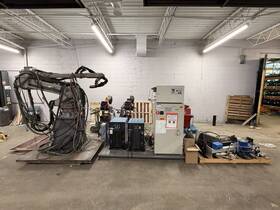
( Brand: Motoman ), ( Manufacturer Part Number: 1900N ), ( Model: EA 1900N ), ( Type: Robotic Arm Assembly ), ( Robotics Controls Type: Arm ), ( Construction Type: Arc Welding )
Review MOTOMAN Welding Robot Control Miller Auto Access 450 Welders
The **Motoman 1900N HP50-20 welding robot**, paired with the **Miller Electric Auto Access 450 welder** and the **NX100 control system**, represents a cutting-edge, high-performance solution for industrial welding applications that demand precision, efficiency, and versatility. This advanced robotic welding system is engineered to deliver exceptional arc quality, consistent welds, and seamless integration into automated manufacturing processes, making it an ideal choice for high-volume production environments such as automotive assembly, aerospace fabrication, metal fabrication shops, and heavy industrial applications. The **Motoman 1900N** is a compact yet robust articulated robot with a **50 kg (110 lb) payload capacity** and a **2000 mm (78.7 in) reach**, allowing it to access tight spaces and perform complex welds with unmatched accuracy. Its **HP50-20** high-performance controller ensures smooth, repeatable motion, minimizing weld inconsistencies and reducing post-processing requirements. The **NX100 control system** from Motoman enhances this further by providing intuitive programming, real-time monitoring, and advanced diagnostics, enabling operators to optimize cycle times, reduce downtime, and maintain peak performance with minimal intervention.
The **Miller Auto Access 450 welder** serves as the powerhouse of this system, offering a versatile and reliable power source capable of handling a wide range of welding processes, including **MIG (GMAW), flux-cored (FCAW), and stick (SMAW) welding**, as well as **plasma cutting and thermal marking**. Its **450-amp output** ensures stable arcs even under demanding conditions, while its **auto-access technology** simplifies setup by automatically adjusting parameters for different wire feeds, voltages, and gases, reducing human error and accelerating job transitions. The welder s **compact, modular design** allows for easy integration into existing production lines, and its **user-friendly interface** makes it accessible for both experienced welders and operators new to robotic automation. Together, the **Motoman 1900N and Miller Auto Access 450** form a dynamic duo that eliminates the limitations of manual welding such as fatigue, inconsistency, and labor costs while delivering **high-speed, high-quality welds** with minimal scrap and rework.
One of the standout features of this system is its **seamless compatibility with Miller s advanced welding technologies**, including **Miller s exclusive **Synergic** and **SmartArc** controls**, which automatically adjust amperage, voltage, and wire feed speed based on the material thickness and joint configuration. This not only enhances weld penetration and bead appearance but also extends electrode and gas cylinder life, reducing operational costs. The **NX100 control system** further elevates the system s capabilities by offering **offline programming (OLP) via Motoman s **Motoman MOTIV** software**, allowing engineers to program and simulate weld paths before the robot even touches the workpiece. This reduces setup time, minimizes errors, and accelerates deployment in new applications. Additionally, the system supports **teach pendant programming, lead-through teaching, and path recording**, making it adaptable to a variety of welding tasks, from simple linear seams to intricate three-dimensional contours.
For industries where **safety, reliability, and uptime** are critical, this robotic welding system excels. The **Motoman 1900N** is built with **rigorous IP67 protection**, ensuring resistance to dust, water, and contaminants in harsh factory environments, while its **redundant drive systems and fail-safe mechanisms** prevent unexpected downtime. The **Miller Auto Access 450** also incorporates **overload protection, short-circuit resistance, and thermal management** to safeguard both the welder and the robotic arm from damage. When paired with **Miller s **Auto-Line** gas distribution system**, the setup further enhances efficiency by providing **precise gas flow control**, reducing spatter, and improving weld cleanliness. The entire system is designed for **long-term durability**, with minimal maintenance requirements, allowing manufacturers to focus on productivity rather than upkeep.
Ultimately, the **Motoman 1900N HP50-20 welding robot with the Miller Auto Access 450 welder and NX100 control** is more than just a welding solution it is a **strategic investment in automation, precision, and operational excellence**. By automating repetitive welding tasks, this system not only **boosts productivity** but also **improves weld quality, reduces labor costs, and enhances workplace safety**. Whether used in high-volume automotive chassis fabrication, intricate aerospace component assembly, or large-scale structural welding, this integrated robotic welding cell delivers **unmatched performance, flexibility, and scalability**, positioning businesses to meet the demands of modern manufacturing with confidence and efficiency.
**Pros and Cons of Buying a Motoman 1900N HP50-20 Welding Robot with NX100 Control, Miller Auto Access 450 Welders**
### **Pros**
1. **High Precision and Repeatability**
The Motoman 1900N is a six-axis articulated robot designed for high-precision welding tasks. Its repeatability of 0.05 mm ensures consistent weld quality, which is critical for industries like automotive, aerospace, and heavy machinery manufacturing. The NX100 control system further enhances programming flexibility, allowing for complex weld paths and adaptive adjustments.
2. **Versatility in Welding Applications**
The robot is compatible with multiple welding processes, including MIG, TIG, and stick welding, thanks to its integration with the Miller Auto Access 450 power source. This versatility makes it suitable for a wide range of materials (steel, aluminum, stainless steel) and joint configurations. The ability to handle different welding techniques without significant reconfiguration is a major advantage for manufacturers with diverse production needs.
3. **High Payload Capacity**
With a payload capacity of 19 kg (42 lbs), the 1900N can handle heavy-duty welding tasks, including large structural components, automotive frames, and industrial equipment. This capacity reduces the need for additional support systems or multiple robots, streamlining workflows in high-volume production environments.
4. **Advanced Control and Programming**
The NX100 control system offers intuitive programming interfaces, including teach pendant and offline programming capabilities. Features like adaptive welding control, collision avoidance, and real-time monitoring improve efficiency and reduce downtime. The system also supports integration with ERP and MES platforms, enabling seamless data exchange and process optimization.
5. **Durability and Reliability**
Motoman robots are known for their robust construction and long operational lifespans, often exceeding 20 years with proper maintenance. The 1900N s design minimizes wear and tear, reducing maintenance costs and increasing uptime. The Miller Auto Access 450 is also a reliable power source, known for its stability and performance in industrial settings.
6. **Energy Efficiency**
Modern welding robots like the Motoman 1900N are designed to optimize energy consumption. Features such as adaptive speed control and efficient motor drives reduce power usage compared to manual welding processes. This can lead to cost savings on energy bills, particularly in large-scale manufacturing operations.
7. **Safety Features**
The robot includes built-in safety mechanisms such as emergency stop functions, light curtains, and collision detection. These features protect operators and equipment, reducing the risk of accidents and damage. The integration with Miller s Auto Access system also ensures safe operation of the welding power source.
8. **Scalability and Integration**
The Motoman 1900N can be easily integrated into existing production lines or automated systems. Its compatibility with industry standards (e.g., OPC UA, Ethernet/IP) allows for seamless communication with other CNC machines, conveyors, or robotic arms. This scalability makes it a future-proof investment as production demands evolve.
9. **Reduced Labor Costs**
Automating welding tasks with a robot significantly reduces reliance on skilled welders, lowering labor costs in the long term. While the initial investment is high, the return on investment (ROI) is often achieved within 2 5 years through increased productivity, reduced waste, and lower labor expenses.
10. **Consistent Product Quality**
Manual welding is prone to human error, leading to inconsistencies in weld quality. The Motoman 1900N ensures uniformity in weld strength, appearance, and dimensions, which is critical for industries with strict quality standards. This consistency also reduces the need for post-weld inspections or rework.
---
### **Cons**
1. **High Initial Cost**
The purchase price of a Motoman 1900N HP50-20 welding robot, along with the NX100 control system and Miller Auto Access 450, is substantial. For small businesses or startups, the upfront investment may be prohibitive. Additional costs include installation, programming, and integration with existing systems.
2. **Training and Workforce Adaptation**
Operating and programming a welding robot requires specialized training. Employees may need to undergo extensive training to effectively use the system, which can disrupt workflows temporarily. Additionally, there may be a learning curve for integrating the robot into existing processes.
3. **Maintenance and Technical Support Costs**
While Motoman robots are durable, they require regular maintenance to ensure optimal performance. Maintenance contracts, spare parts, and potential repairs can add to the long-term operational costs. Smaller companies may lack in-house expertise, necessitating reliance on external technical support.
4. **Space Requirements**
The 1900N has a significant footprint, requiring dedicated workspace for installation. Factories with limited floor space may struggle to accommodate the robot without redesigning their layout. Additionally, the robot s movement range must be carefully planned to avoid collisions with other equipment or obstacles.
5. **Initial Setup and Programming Time**
Configuring the robot for specific welding tasks can be time-consuming, especially for complex geometries or custom applications. Offline programming (using software to simulate weld paths) can mitigate this, but it still requires expertise and may delay production ramp-up.
6. **Depreciation**
Like all industrial equipment, the Motoman 1900N will depreciate over time. While it is a long-term investment, businesses must account for this in their financial planning, especially if they anticipate upgrading to newer technology in the future.
7. **Limited Flexibility for Small Batches**
While the robot excels in high-volume, repetitive welding tasks, it may not be as efficient for small batch production or highly customizable jobs. Switching between different weld programs can take time, making the robot less ideal for low-volume, high-variety manufacturing.
8. **Integration Challenges**
Integrating the robot with legacy systems or non-compatible equipment can be complex and may require custom solutions. Compatibility issues with PLCs, vision systems, or other automation tools could introduce delays or additional costs.
9. **Potential for Overautomation**
In some cases, businesses may overestimate the robot s capabilities or underestimate the complexity of their welding needs. This can lead to frustration if the robot cannot fully replace manual processes or if it requires extensive customization to meet specific requirements.
10. **Environmental Considerations**
Welding robots generate fumes, sparks, and heat, which require proper ventilation and safety measures. Factories must invest in exhaust systems, fume extraction, and cooling solutions to maintain a safe working environment. Neglecting these factors can lead to health hazards for operators or equipment damage.
---
### **Ending Conclusion**
The Motoman 1900N HP50-20 welding robot with NX100 control and Miller Auto Access 450 welders is a powerful and versatile tool for industries requiring high-precision, repeatable welding. Its strengths lie in its precision, payload capacity, adaptability to multiple welding processes, and long-term reliability. These attributes make it an excellent choice for large-scale manufacturing, automotive production, aerospace, and heavy machinery industries where consistency and efficiency are paramount.
However, the decision to purchase this robot is not without challenges. The high initial cost, training requirements, maintenance needs, and potential integration complexities must be carefully considered. Small businesses or those with limited space or low-volume production may find the investment less justified. Additionally, the robot s effectiveness depends on proper planning, programming, and ongoing support.
For businesses that can justify the upfront investment and have the infrastructure to support it, the Motoman 1900N offers significant long-term benefits, including reduced labor costs, improved product quality, and increased productivity. The key to a successful implementation lies in thorough planning, adequate training, and a clear understanding of how the robot will integrate into existing workflows.
### **Recommendation**
**Purchase the Motoman 1900N HP50-20 welding robot if:**- Your business operates in a high-volume manufacturing environment where precision and repeatability are critical.
- You have the budget to cover the initial investment, including installation, programming, and potential integration costs.
- Your production requires versatility in welding processes (MIG, TIG, stick) and handling of heavy-duty components.
- You are willing to invest in training for your workforce to ensure efficient operation and maintenance of the robot.
- Your facility has the space and infrastructure to accommodate the robot safely and effectively.
**Avoid purchasing the Motoman 1900N if:**- Your production involves low-volume, highly customizable welding tasks where the robot s strengths are not fully utilized.
- Your budget is constrained, and you cannot justify the high initial cost or long-term maintenance expenses.
- Your existing workflows lack the infrastructure to integrate the robot without significant redesign or additional investments.
- You lack in-house expertise in robotics programming or welding automation, and external support costs will be prohibitive.
**Alternative Considerations:**- For smaller operations or pilot projects, consider leasing the robot or purchasing a used model to test its feasibility before committing to a full purchase.
- Evaluate whether a smaller or less advanced robot (e.g., Motoman HP20DN or similar) would meet your needs at a lower cost.
- If your primary need is for MIG welding, explore other high-performance robots or hybrid systems that combine robotic arms with manual welding stations for greater flexibility.
Ultimately, the Motoman 1900N is a robust and capable welding robot that delivers exceptional results for the right applications. Careful evaluation of your business needs, financial resources, and operational readiness will determine
Details:
2 x MILLER AUTO ACCESS 450 Welders. MOTOMAN Robot model HP-5020. Whole assembly was working when removed.
part #: 1900n prices
- $299.99-$13000.00
specifications robotiindustri:
- brand: Motoman
- mpn: 1900n
- model: Ea 1900n
- type: Robotic Arm Assembly
- robotics controls type: Arm
- construction type: Arc Welding
shipping robotiindustri:
- class: Freight
- service: Flat Rate Freight
- cost: $1500.00
- type: Fixed
seller robotiindustri:
- rating: 99.5%
- # reviews: 8346
- city: Farmington, Michigan
returns robotiindustri:
- time: 30 Days
- method: Money back
- paid by: Buyer
- policy: Returns Accepted
offer robotiindustri:
- availability: In Stock
- sold: 0
- quantity: 1
- started: March 25, 2026
- options: Ship-to-home
general robotiindustri:
- condition: Used
- Business Industrial > Industrial Automation Motion Controls > Industrial Robotic Arms
payments robotiindustri:
- credit card: Diners-club
- money order
- cash
- check
- wallet: Paypal
- other
- wire transfer
Motoman 1900N Is Similar To:
- 10-1007-4000 Intelitek New Gravity Parts Feeder Motoman Mhjf Robot (18.7% similar) Joe Bridget. Please view the pictures and contact me with any questions free shipping...(July 18th, 2018)
- 132350-10 Yaskawa Motoman Robot I-o (25.2% similar) 8 this unit is in excellent condition guaranteed to work. Unit 1a b, st. Tel: queens ton st. Segway Motoman robot I o cable assembly rev...(April 8th, 2017)
- 132350-2 Yaskawa Motoman Robot I-o (25.4% similar) Tel: queens ton st. Segway Motoman robot I o cable assembly rev. 8 this unit is in excellent condition guaranteed to work. Unit 1a b, st...(June 8th, 2017)
- 142958-1 Yaskawa Motoman Robot Xrc (28.8% similar) Unit 1a b, st. Tel: queens ton st...(March 26th, 2017)
- 142959-1 Yaskawa Motoman Hw9271140-5-n Robot (28.1% similar) Unit 1a b, st...(March 26th, 2017)
- 142995-2 Yaskawa Motoman 9947 Robot (25.2% similar) unit 1a b, st. Tel: queens ton st...(March 26th, 2017)
- 147406-5 Yaskawa Brand New No Box Motoman Robot Harness (25.9% similar) Items listed new are in factory packaging. For pickup arrangements please also contact. 30 day money back guarantee with any questions thru messaging. If ups or FedEx is required to ship due weight size, extra charges may apply...(December 25th, 2018)
- 149449-2 Yaskawa Motoman Yasnac Arc Teach Pendant Membrane Welding (24% similar) Snack RC teach pendant membrane...(September 20th, 2018)
- 156798-5 Motoman Yaskawa Robot Teach Pendant Cable Programming Wire (34.4% similar) Motoman Segway DX100 robot teach pendant cable: new Motoman cable, surplus from a large manufacturers spare parts inventory...(June 6th, 2018)
- 159371-1 Yaskawa Motoman Robot Japmc-i02308r-e (26.2% similar) Motoman JAPMC-I02308R-E control board: new as shown in the pictures...(August 18th, 2017)
- 3-ls14500-1 Motoman Yaskawa Robot Battery Cell Lithium Assembly (29.9% similar) Tel: bushman road, unit 47-48, st. Segway Motoman 3 LS14500-1 robot batter. 7AH - 3 cell lithium assembly LS14500-1 Segway Motoman robot batter. 7AH - 3 cell lithium assembly this unit is in excellent condition guaranteed to work...(July 28th, 2018)