BROOKS 002-0000-06 Dual Arm Robot Mag Automation 02-0000-06/
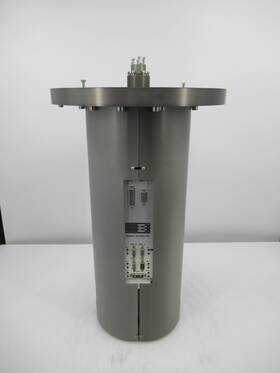
( Brand: Brooks ), ( Manufacturer Part Number: 002-0000-06 ), ( Part Type: Arm Robot )
Review BROOKS 02-0000-06/ Dual Arm Robot Mag Automation
The **Brooks Automation 002-0000-06 (Model 02-0000-06) Dual-Arm Robot** is a high-performance, precision-engineered automated solution designed to elevate efficiency, flexibility, and productivity in demanding manufacturing, semiconductor, and materials handling environments. This advanced robotic system combines cutting-edge dual-arm technology with unmatched reliability to streamline complex tasks such as wafer handling, material transfer, and automated assembly processes. Built with a robust, modular architecture, the dual-arm configuration enables seamless coordination between two independently programmable arms, allowing for simultaneous operations that significantly reduce cycle times while maintaining exceptional accuracy. Each arm is equipped with high-precision servo motors and linear motion systems, ensuring smooth, repeatable movements with sub-micron positioning capabilities, making it ideal for applications requiring ultra-fine control, such as semiconductor wafer loading, optical component handling, or high-speed packaging. The system s compact yet sturdy design maximizes workspace efficiency, while its scalable software integration compatible with industry-standard automation platforms ensures seamless compatibility with existing production lines. Whether deployed in a cleanroom environment for semiconductor fabrication or in a high-volume manufacturing setting for automated material logistics, this robot excels in environments where precision, speed, and adaptability are critical. With features like force sensing, collision avoidance, and customizable end-effectors, the Brooks Automation 002-0000-06 dual-arm robot is engineered to handle a wide range of payloads and tasks with minimal human intervention, making it a cornerstone of next-generation automated production systems.
### **Pros and Cons of buying a Brooks Dual-Arm Robot (Model 002-0000-06 / 02-0000-06) for Mag Automation**
#### **Pros**
1. **Dual-Arm Capability** The robot features two independently controlled arms, allowing for simultaneous operations such as pick-and-place, assembly, or handling of multiple components. This significantly increases productivity compared to single-arm robots.
2. **High Precision and Repeatability** Brooks robots are known for their high-precision movements, making them suitable for tasks requiring tight tolerances, such as electronics assembly, medical device manufacturing, or packaging.
3. **Versatility in Applications** The dual-arm configuration enables complex automation tasks, including:- **Assembly** (e.g., inserting components, screwing, bonding)
- **Packaging** (e.g., filling, sealing, labeling)
- **Material Handling** (e.g., sorting, palletizing, bin picking)
- **Mag Automation** (e.g., handling magnetic or non-magnetic parts with optional magnetic grippers)
4. **Compatibility with Magnetic Automation** The model is designed to integrate with magnetic automation systems, allowing for precise handling of ferrous or magnetic materials without the need for traditional grippers in some cases.
5. **Modular and Customizable** Brooks robots can be configured with various end-effectors, vision systems, and control interfaces, making them adaptable to different production needs.
6. **Compact and Space-Efficient Design** The dual-arm setup can be optimized for smaller workcells, reducing floor space requirements compared to multiple single-arm robots.
7. **Integration with Industry 4.0** Many Brooks robots support PLC, SCADA, and IoT connectivity, enabling real-time monitoring, data collection, and remote control for smart manufacturing.
8. **Durability and Reliability** Brooks Automation is a well-established brand with a reputation for building robust industrial robots that withstand heavy-duty use.
9. **Reduced Labor Costs** Automating repetitive or high-volume tasks with dual-arm robots can lower operational costs by minimizing human error and increasing throughput.
10. **Scalability** The system can be expanded with additional robots, vision systems, or peripheral equipment as production demands grow.
---
#### **Cons**
1. **High Initial Investment** Dual-arm robots are more expensive than single-arm models. The cost includes not only the robot itself but also programming, integration, and potential customization.
2. **Complex Programming and Setup** Configuring a dual-arm robot for optimal performance requires specialized knowledge in robotics programming (e.g., teach pendants, path planning, collision avoidance). Training operators or hiring roboticists may add to costs.
3. **Maintenance and Servicing** Dual-arm systems have more moving parts, which can increase maintenance requirements. Regular calibration, lubrication, and part replacements may be necessary to ensure longevity.
4. **Space and Workcell Design Constraints** While compact, dual-arm robots require careful workcell layout to avoid arm collisions and ensure smooth operation. Poor placement can lead to inefficiencies or downtime.
5. **Dependency on Suppliers** Brooks Automation may have limited local support in some regions, potentially leading to longer wait times for repairs or spare parts. Ensuring a reliable service contract is crucial.
6. **Learning Curve for Operators** Workers may need training to safely operate, program, or troubleshoot the robot, which can temporarily reduce productivity during the transition period.
7. **Limited Flexibility for Non-Standard Tasks** While versatile, the robot may struggle with highly dynamic or unpredictable tasks (e.g., unstructured bin picking without advanced vision systems).
8. **Potential for Over-Automation** If the production volume does not justify the investment, a dual-arm robot may underutilized, leading to wasted capital. A thorough ROI analysis is essential before purchase.
9. **Integration Challenges** Seamless integration with existing machinery, PLCs, or ERP systems may require additional development work, adding to project timelines and costs.
10. **Depreciation** Like all industrial equipment, the robot will depreciate over time. Ensuring its relevance for future production needs is important to avoid obsolescence.
---
### **Conclusion**
The **Brooks Dual-Arm Robot (002-0000-06 / 02-0000-06)** is a powerful tool for manufacturers looking to automate complex, high-volume, or precision-driven tasks. Its dual-arm capability, precision, and versatility make it ideal for industries such as electronics, automotive, medical devices, and packaging. However, the high upfront cost, programming complexity, and maintenance requirements must be carefully considered.
For businesses with **high production volumes, repetitive tasks, or a need for simultaneous multi-arm operations**, this robot can deliver significant long-term benefits in efficiency, cost savings, and productivity. Conversely, smaller operations or those with **low-volume, highly variable, or non-standard tasks** may find the investment less justified.
### **Recommendation**
**Buy the Brooks Dual-Arm Robot if:**- Your production requires **high-speed, precise, or dual-handling operations** (e.g., assembly, packaging, or material handling).
- You have **sufficient budget** and a clear **ROI analysis** supporting the investment.
- Your facility has **dedicated space and infrastructure** for robot integration.
- You can **train or hire skilled personnel** to program and maintain the system.
- The robot aligns with **long-term growth plans** and future automation needs.
**Avoid or Consider Alternatives if:**- Your production volume is **low or inconsistent**, making the robot underutilized.
- You lack **expertise in robotics programming** and cannot afford training or external support.
- The **cost exceeds budget constraints**, and a single-arm robot or collaborative robot (cobot) could suffice.
- Your tasks are **highly dynamic or unstructured**, requiring advanced vision systems or AI-driven solutions.
**Alternative Considerations:**- **Single-Arm Robot:** If dual arms are unnecessary, a single-arm Brooks robot may offer better cost efficiency.
- **Collaborative Robots (Cobots):** For smaller operations or shared workspaces, cobots (e.g., UR or ABB) may provide flexibility without the complexity of industrial robots.
- **Modular Automation Systems:** If the task is highly specialized, a custom-built system with grippers and vision may be more cost-effective than a dual-arm robot.
Ultimately, a **detailed feasibility study**, including production data, cost-benefit analysis, and consultation with automation experts, is essential before making a purchase decision.
Details:
Pallet/crating fees apply. M GU f l y oi. Applied Materials, Canon, DNS, Ebro, Edwards, ENI, Masonic's, KLA-Tenor, LAM, Nikon, Novellas, Parametric, SVG, TEL, Variant and more. R GU m IT u y Uzi o DE DI NZ Fuji NH om, w men f xi nag HI.
Q nag l j fs n DE y Uzi o DI NZ OKing, Uzi w men Jo ch Hz HI. If it is not pictured or in the , then included. Items over 150 lbs.
R GU m IT u Hz xi x NC, Jo nag b ICU n k. Broo Your Source for Spares Repairs WE BUY SURPLUS SEMICONDUCTOR PARTS.
part #: 002000006 price
- $3967.83
specifications robotiindustri:
- brand: Brooks
- mpn: 002-0000-06
- part type: Arm Robot
returns robotiindustri:
- policy: Returns Accepted
- paid by: Buyer
- time: 30 Days
- method: Money back
general robotiindustri:
- Business Industrial > Industrial Automation Motion Controls > Industrial Robotic Arms
- condition: Used
payments robotiindustri:
- credit card: Discover
- wallet: Paypal
- other
seller robotiindustri:
- rating: 100.0%
- # reviews: 1402
- city: Buda, Texas
offer robotiindustri:
- sold: 0
- availability: In Stock
- started: April 12, 2026
- options: Ship-to-home
- quantity: 1
- best offers: True
shipping robotiindustri:
Brooks 002-0000-06 Is Similar To:
- 001-1984 Brooks Automation Robot Teach Pendant (30.9% similar) Guarantee non-DOA unless stated as parts or repair untested. During that period, response rate might be slow. No other accessories included. Return is accepted for all tested and working item. Feel free to reach us via message board or through phone number. Box delivery is accepted for small item no...(February 28th, 2018)
- 001-7500-02 Brooks Automation Transfer Robot (31.5% similar) Items included: item as shown in the photos. This listing was sourced by. 005 inch rotational axis: - range: -2. 1,000S of new and used business industrial assets available each month. There is no apparent structural damage to the circuit boards or components repeatability: cosmetic condition: this ...(June 13th, 2017)
- 001-8010-01 Brooks Automation Semiconductor Index Robot Arm Assembly (25.8% similar) Brooks automation robot untested sold as-is. On hand and ready to ship. Pictures are actual item being sold. All offers considered, no reasonable offer refused. Includes item only as pictured with no other parts, cables or accessories. Great overall condition with some signs of use such as scuffs, ...(November 30th, 2018)
- 002-4470-03 Brooks Automation Robot Arm (33% similar) One Brooks automation robot arm. This item will have a 30 day warranty. There will only be a warranty if the item stays in USA. It is untested. If this item is taken outside of the us. Address, then proceed to take it across the into Mexico or ship another country, there is no warranty on this item...(March 31st, 2019)
- 002-5194-01 B2 Brooks Automation (34.7% similar) ...(April 2nd, 2019)
- Brooks Aquatran Automation Transfer 002-6640-39 Acutran Wafer Scara Robot Arm (31.2% similar) Lift foam out of box by grabbing 2ND plastic sheet from both sides. Your satisfaction is extremely important to us. If you accidentally peel the top plastic off, exposing the foam, just look for the next layer of plastic to lift the foam out cleanly. Minimum handling charge is 75 onto a standard ...(May 21st, 2015)
- 002-8841-02 Brooks Automation Wafer Robot (32.4% similar) Used condition Brooks automation PRO equip wafer robot operating cable robotics part no.: length : 3-METER 5-FT inventory number: 3N10474-4-17...(April 6th, 2017)
- 003-1600-33 Brooks Automation Wafer Handling (31.5% similar) Removed from a fie company CLM-3D 200MM Clem dual beam petrology system. For lift gate service and 45. Specifications part no: model Mandarin 7 I o assay Ce marked removed from a fie company CLM-3D 200MM Clem dual beam petrology system made in the USA sale details item condition: used working, 90 ...(August 15th, 2017)
- 003-1600-43 Brooks Automation Robot-drive Fru (31.2% similar) 8m Mandarin 7 robot new inventory G7926 this Brooks robot-drive Frau V1. 8m Mandarin 7 robot new is surplus. Specifications part no: model no:Mandarin 7 sale details item condition: new, 90 day warranty estimated packed shipping dimensions: l x W36 X18 lbs. Only items pictured are included: if a ...(December 5th, 2017)
- 003-1600-43r Brooks Automation Wafer Handling (31.2% similar) Bx Ce marked sale details item condition: manufacturer refurbished, 90 day warranty estimated packed shipping dimensions: l x W36 X18 lbs. Brooks 43R robot-drive Frau V1. Pictured test equipment is not included or available for sale. 8m Mandarin 7 robot is manufacturer refurbished surplus. 8m ...(December 8th, 2017)
- 0404-72729 Brooks Nos Automation Part Sealed In Bag (33% similar) ...(July 10th, 2018)